AI is already firmly on the agenda for asset management firms, with organisations looking at where the technology could support the business and where investment is likely to have the most impact. As that investment grows, there is also more pressure to understand what it is delivering and where firms could be getting more value from it.
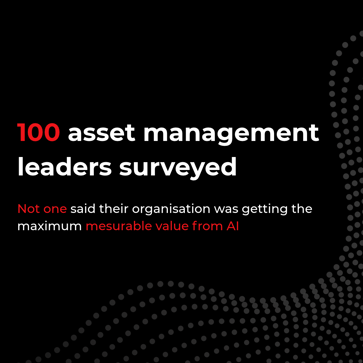
Our latest research found that not one of the 100 asset management leaders we surveyed said their organisation was getting the maximum measurable value from AI. Every respondent identified at least one factor preventing them from getting more from their AI investments.
That doesn’t mean firms are turning away from AI, but it does raise an important question about what needs to change for those investments to deliver more for the business.
The value question is getting harder to ignore
As AI becomes a bigger part of technology investment, firms will naturally expect more from it. Experimentation has its place, especially while organisations work out where AI fits, but at some point those projects need to prove their worth.
That puts more emphasis on the outcome behind each initiative. A project designed to solve a specific business problem gives firms something concrete to measure, rather than leaving success defined by adoption alone.
The goal doesn’t have to be dramatic. Saving time on a labour-intensive process, making information easier to use or improving the way a particular task is handled can all provide a clearer basis for judging whether an AI investment is doing its job. For firms deciding where to invest next, knowing what is delivering value could prove just as important as identifying new opportunities.
Value depends on what sits around the AI
An AI tool doesn’t operate in isolation. Its usefulness will depend on the wider technology environment, the information it can draw from and the capacity within the business to support it.
That makes some of the less headline-grabbing technology work increasingly important. Connecting systems, improving access to data and creating enough capacity within technology teams may not carry the same excitement as launching a new AI initiative, but they can have a direct bearing on what that initiative is able to achieve.
It also makes prioritisation important. When an AI project isn’t delivering as much as expected, moving straight onto the next idea risks adding more work without addressing what prevented the first one from delivering. Taking stock of existing initiatives can help firms understand where more attention is needed and where further investment is likely to pay off.
Some projects may need better access to data or closer integration with existing systems. Others may need more time, resource or a clearer measure of success. There will inevitably be ideas that looked promising at the outset but don’t justify further investment.
For technology teams already balancing AI alongside modernisation, resilience and the day-to-day demands of running the business, those choices matter. Getting more value from AI may depend as much on where firms choose to focus their efforts as it does on how much they invest.
Turning investment into something the business can see
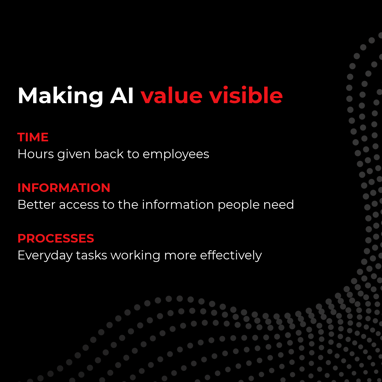
As AI matures, simply being able to say that the business is investing in it will become less important than being able to show what that investment has achieved.
That could change the way firms think about the next stage of their AI plans. Instead of measuring progress by the number of projects underway, there is an opportunity to look more closely at what those projects are contributing and where the strongest case exists for taking them further.
This doesn’t mean every AI initiative needs to deliver an immediate financial return. The value may show up in the time employees get back, better access to information or improvements to an existing process. What matters is having enough clarity around the intended outcome to judge whether progress is being made.
That clarity gives firms a stronger basis for future investment decisions too. Where an initiative is working, there may be a case for expanding it. Where results are less convincing, firms can look at what is getting in the way before committing further resource.
As firms become more selective about their AI plans, this discipline will matter. There will always be another idea to explore, but firms need to know which ones are worth pursuing and which need more work before they go any further.
Making AI investment count
The findings from our research show there is still a gap between the potential firms see in AI and the value they are getting from it today.
Closing that gap won’t come from pursuing every possible use case. It requires firms to be clearer about the outcomes they want, understand what their existing initiatives need to succeed and make deliberate choices about where further investment will have the most impact.
As investment grows, firms will need a clearer view of where AI is delivering value and where there’s still work to do.
Our latest report, The future of technology in asset management, explores what 100 senior asset management leaders told us about AI and the wider technology priorities shaping the sector.
Download the report to read the full findings.